

Strengthening Timber Traceability: A Practical Guide for Policymakers and Practitioners
The Timber Traceability: A Diagnostic Tool for Practitioners and Policymakers provides practical guidance for governments and system designers developing, implementing and assessing government-owned timber traceability systems. The report introduces the key elements of timber traceability, including scope, identifiers, levels of traceability, reporting procedures, data management, monitoring and verification, and presents a framework with guiding questions to support system design and implementation. Drawing on existing experiences, including 11 timber traceability systems in seven Latin American countries, the guide highlights how well-designed traceability systems can support forest governance, improve monitoring of timber flows and strengthen efforts to demonstrate legality and sustainability. It also considers challenges such as limited resources, stakeholder capacity, institutional cooperation and private-sector participation, while emphasizing the importance of designing systems according to the specific needs and context of each country.
Download
Available in the following languages:
Other resources
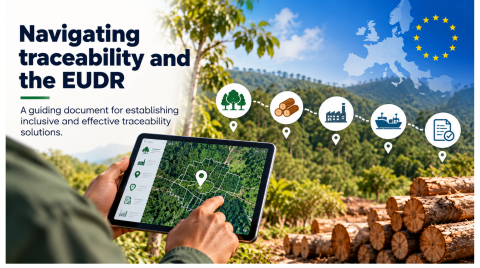
Navigating Traceability and the EUDR: A Guide to Inclusive Traceability Solutions
This GIZ publication provides practical guidance on understanding traceability requirements under the EU Deforestation Regulation (EUDR) and selecting effective, inclusive traceability solutions. It explores different types of traceability systems, the importance of interoperability and stakeholder collaboration, and ways to support smallholders in meeting traceability needs and maintaining access to supply chains.
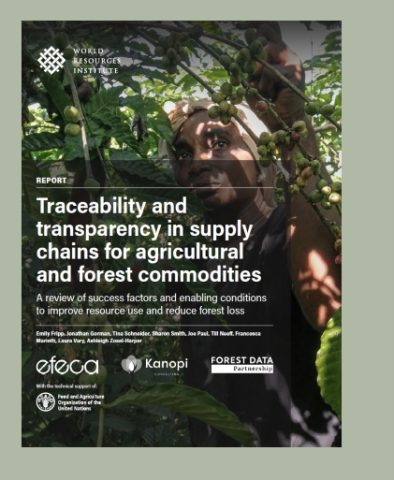
Traceability and Transparency in Supply Chains for Agricultural and Forest Commodities
Traceability and transparency in supply chains are necessary to understand the impact of commodities on forests, and to support the design, implementation, monitoring of effective solutions to address forest loss, and help make agricultural production and food systems more sustainable. This report discusses success factors and enabling conditions to improve resource use and reduce forest loss, providing an updated evidence base to inform and advance collaborative discussions and actions on traceability and transparency.
Realizing the Potential of Interoperability for Building More Trustworthy and Transparent Global Agrifood Supply Chains
Guidance on interoperable digital traceability to boost trust and transparency in agrifood supply chains, linking regulation to human development and sustainability, with a real-world case offering practical insights for solution providers and policymakers.
Have resources to share?
Contribute to our knowledge base by submitting new materials and resources — or reach out directly at ttnavigator@pbn.org